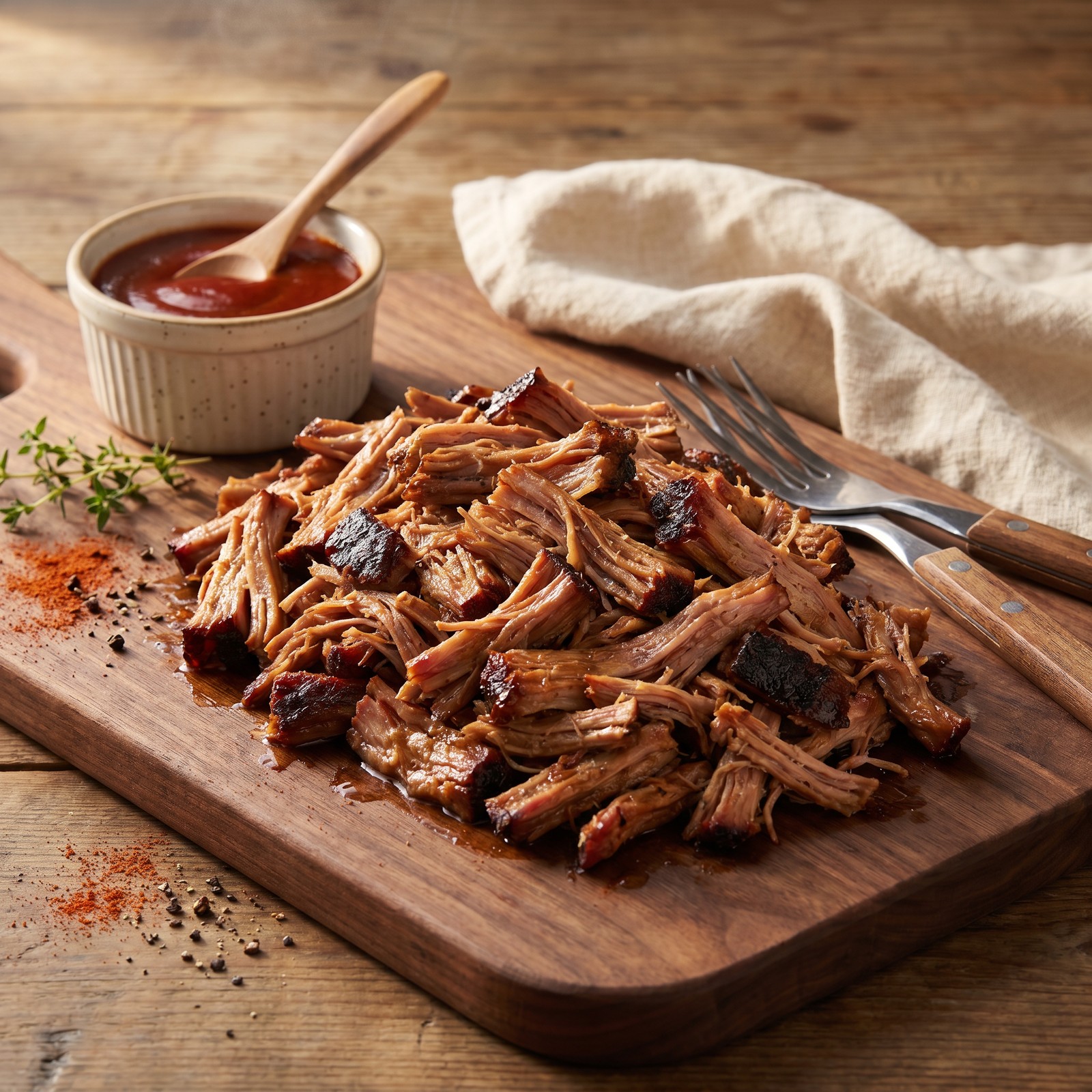
Boneless Boston butt with a mustard binder and rub crust, smoked low and slow over apple wood, then pan-braised at the stall in butter, agave, and apple juice until it pulls apart with a fork.
Trim the pork butt. Trim any thick, hard fat from the boneless pork butt, leaving a thin, even layer (about ¼ inch). Pat dry with paper towels on all sides.
Tip: dry meat takes a better bark. A quick uncovered rest in the fridge for 30 minutes after patting helps even more.
Mustard binder. Coat the entire pork butt with a thin layer of yellow mustard. You shouldn’t taste it in the finished meat — it’s only there to help the rub stick.
Rub generously. Season all sides with your favorite pork rub, pressing it in firmly so it adheres to the mustard. Coat the top, bottom, and edges.
Preheat the smoker to 250°F. Load with apple wood for a mild, slightly sweet smoke. For a stronger barbecue flavor, blend in a little hickory.
Wood note: apple is the workhorse for pulled pork — sweet, mild, never harsh. A few hickory chunks layered in deepen the bark color and add a smokier edge if you want it.
Fill the spray bottle. Pour straight apple cider vinegar into a clean spray bottle for the spritz. Keep it nearby.
Rest in a cooler — 2 hours. Pull the covered pan off the smoker. Wrap the whole pan in a towel and rest it inside a clean, empty insulated cooler for at least 2 hours. The pork keeps cooking gently and reabsorbs juice.
A real rest is the difference between dry pulled pork and the kind that drips when you lift it. Don’t skip this.
Save the juices. Open the pan and pour the liquid into a fat separator or measuring cup. Set aside — these are gold for reheating leftovers.
Shred. Transfer the pork to a large tray. Use a pair of forks (or heatproof gloves) to pull it into long shreds, mixing the bark pieces and the tender interior together.
Moisten and serve. Spoon some of the reserved juice back over the shredded pork to keep it glossy. Taste and add a pinch of extra rub if it needs a lift.
Pile it onto a board or platter. Serve plain with extra juice on the side, on soft potato buns with slaw and pickles, or stacked on a plate with cornbread and beans. BBQ sauce on the side — never drowned.
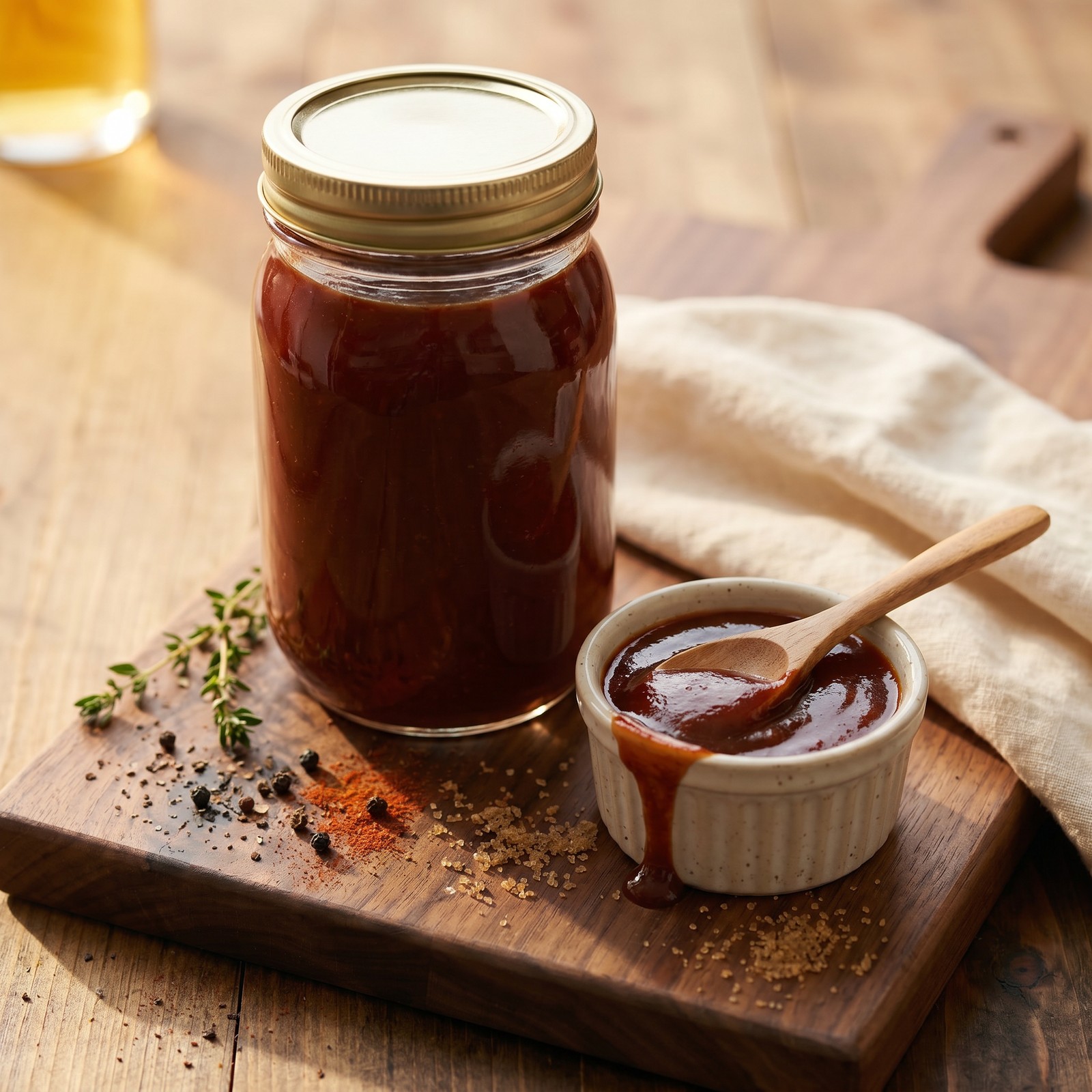
A glossy, sweet-leaning no-cook sauce that fits pulled pork especially well. Brush onto buns or set out a ramekin on the side.
Cook times vary wildly with smoker and butt size. Pull when a probe slides in cleanly at ~204°F — not at a fixed hour mark.
The stall is normal — moisture evaporating off the surface. Panning and covering at ~160°F powers through it without losing bark.
Spritzing too early washes the rub off. Wait until the bark visually sets — usually 2–3 hours in.
Mild, sweet, never harsh. Blend in a chunk or two of hickory if you want a stronger barbecue note.
Two hours in an insulated cooler keeps the pork above 140°F, reabsorbs juices, and transforms the texture.
Stir a few tablespoons of saved pan liquid into leftovers as you reheat. Dry pulled pork is almost always a rehydration problem, not a meat problem.
Most commercial rubs are already plenty salty. Skip the standalone kosher salt step unless your rub is unseasoned.
Pile the meat unsauced and let people add their own. Bark gets soggy if you toss it through sauce ahead of time.