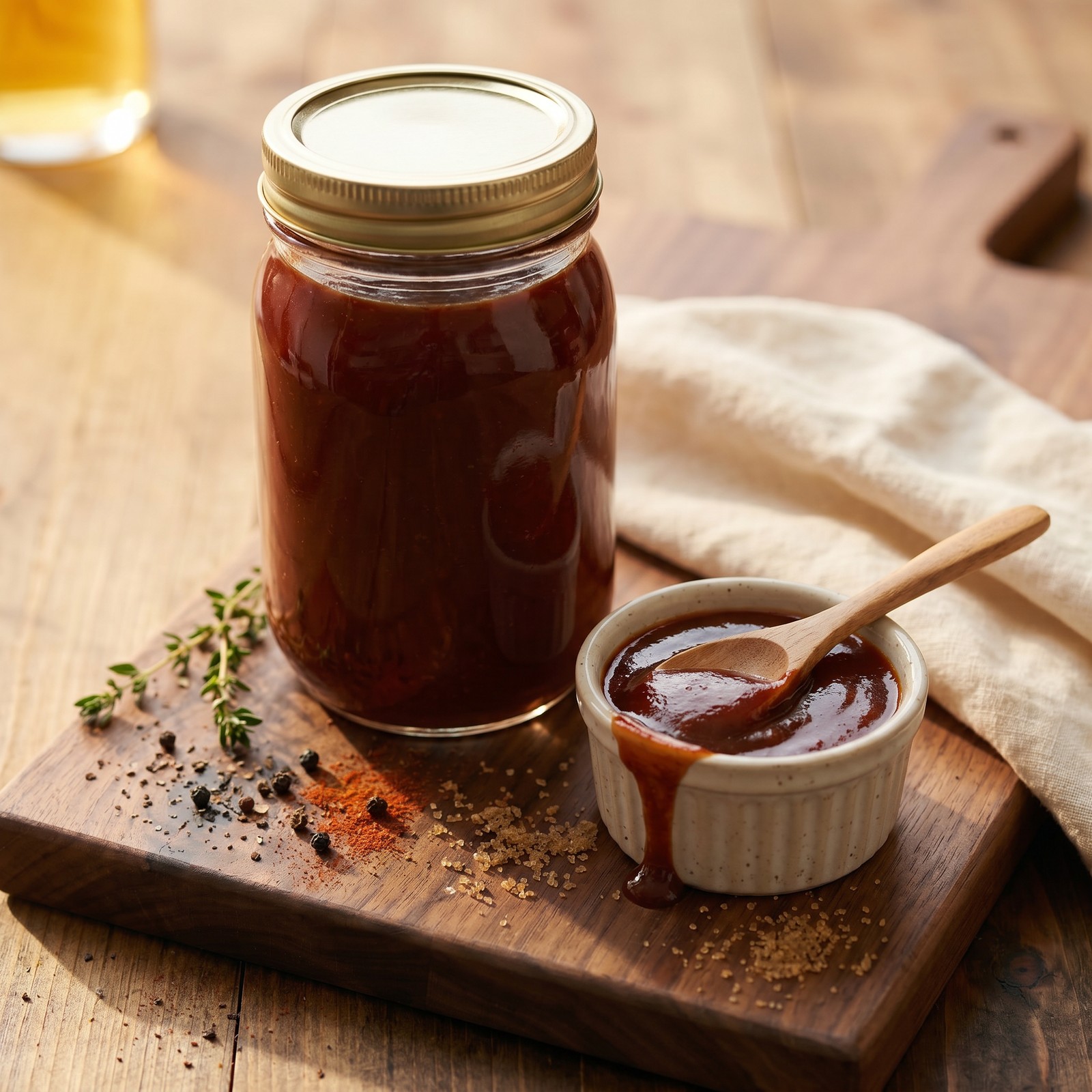
A glossy, sweet-leaning house barbecue sauce with deep brown-sugar richness, a soft tang, and warm spice. No cooking required — just whisk, rest, and ladle. Dial the vinegar up or down to land between sweet-and-sticky and bright-and-tangy.
Combine in a large bowl. Add the ketchup, dark brown sugar, the starting amount of apple cider vinegar, Worcestershire sauce, mustard powder, paprika, garlic powder, onion powder, and black pepper. Add a small pinch of salt only if the ketchup tastes flat.
Tip: pack the brown sugar firmly into the measuring cup — not loose scoops. Loose sugar will make the sauce thinner and less sweet.
Whisk until smooth and glossy. Work the sauce for several minutes until every grain of brown sugar has dissolved. The finished sauce should look uniform, deep mahogany, and ribbon off the whisk.
Taste and dial in the tang. Whisk in additional apple cider vinegar a tablespoon at a time, up to the total shown above. More vinegar means brighter and slightly thinner; less means sweeter and stickier.
Jar it. Transfer to a clean mason jar (or two), seal, and refrigerate for at least several hours — overnight is better. The sauce thickens and the flavors round out as it rests.
Stir before each use. Brush onto ribs or chicken in the last few minutes of cooking, slather on burgers, spoon over pulled pork, or use as a dip for fries and tenders. Keep refrigerated and finish within 1 to 2 weeks.
Brown sugar is meant to be packed. Loose scoops mean a thinner, less-sweet sauce and inconsistent results between batches.
Start sweet, then dial up the tang. It's easy to add more vinegar — impossible to take it out.
The no-cook approach relies on the fridge to finish dissolving the sugar and settle the flavors. Give it at least a few hours.
Ketchup and Worcestershire are both salty. Taste first — only add a pinch of salt if the sauce reads flat.
Run the mason jar through a hot wash or quick boil. A clean jar is the difference between two weeks and four days.
Apply in the last 5–10 minutes only. The brown sugar burns fast over direct heat — late glazing keeps the lacquer without the char.